
What Is an Omamori? Meaning, Types & How to Use One in Your Car
13 October 2026
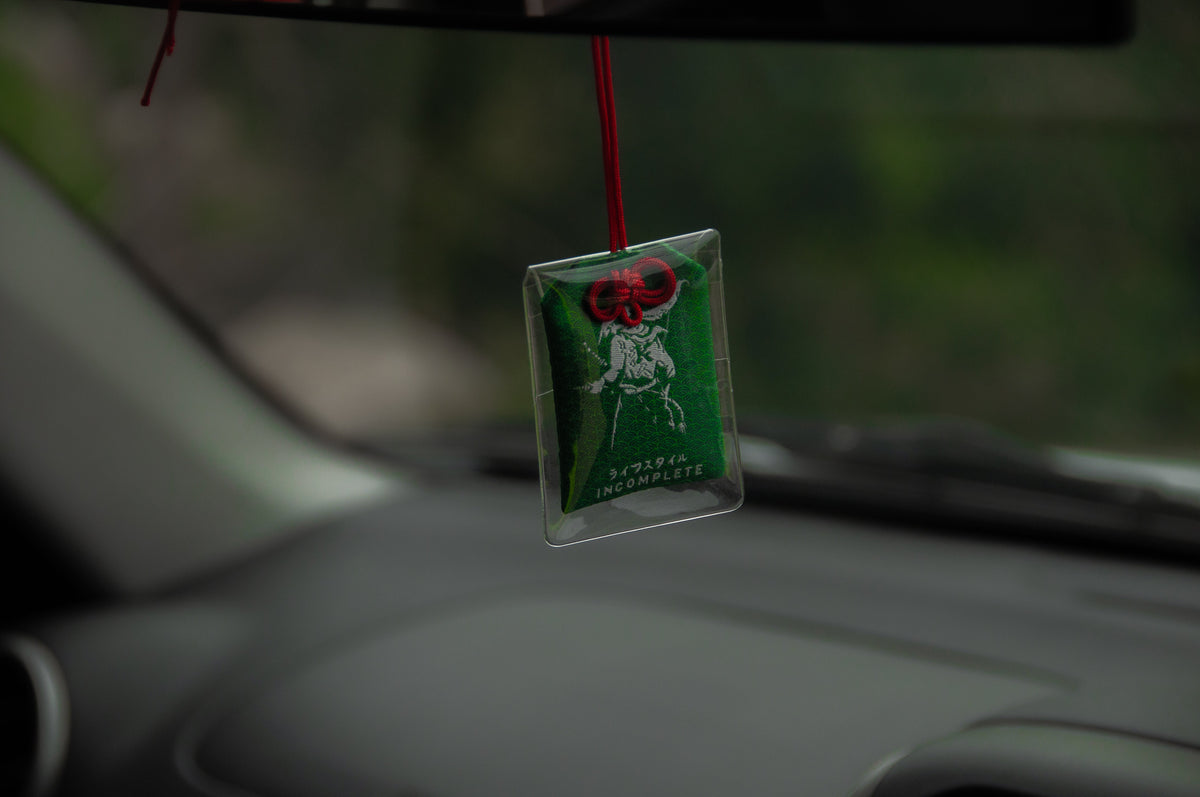
If you've ever sat in a car in Japan, there's a good chance you saw a small embroidered pouch hanging from the mirror or tucked in the cabin. That's an omamori (お守り), and it's one of the most recognisable pieces of Japanese culture you'll find in JDM interiors today.
Here's what an omamori actually is, what the different types mean, and how to pick and hang one in your own car.

Our Koi Fish omamori, hanging in a build.
What is an omamori?
Omamori comes from the Japanese word mamoru, "to protect". Traditionally, omamori are sold at Shinto shrines and Buddhist temples across Japan. Each one is a small fabric pouch, usually embroidered with the name of the shrine and the blessing it carries, with a prayer or sacred inscription sealed inside.
Every omamori has a purpose. Instead of general "good luck", you choose the one that matches what you want protection or help with: safe driving, health, business, study, love and so on.
Common types of omamori and what they mean
| Type | Japanese | Meaning |
|---|---|---|
| Kōtsū Anzen | 交通安全 | Traffic safety. The classic car charm, for protection on the road |
| Yakuyoke | 厄除け | Warding off bad luck and evil spirits |
| Kaiun | 開運 | Opening up good fortune in general |
| Shōbai Hanjō | 商売繁盛 | Business success and prosperity |
| Kenkō | 健康 | Good health |
| Gakugyō Jōju | 学業成就 | Success in study and exams |
| En-musubi | 縁結び | Love, relationships and good connections |
| Kanai Anzen | 家内安全 | Safety and happiness for your family and home |
For drivers, Kōtsū Anzen (traffic safety) is the one you'll see most. In Japan it's common to pick one up when you buy a new car.
Omamori etiquette
- Don't open it. Traditionally, opening the pouch is said to release the protection inside.
- Keep it close. Hang it in your car, clip it to your bag or keep it with your keys, wherever it relates to its purpose.
- Refresh it yearly. Shrine omamori are traditionally replaced around the new year, and the old one is returned to a shrine to be respectfully burned.
Why omamori became part of car culture
Car culture has always been about making a machine feel like yours. An omamori adds meaning to a build: a reminder to drive safe, a nod to Japanese culture, and a small detail people notice when they look inside. That mix of story and style is exactly why they've become a staple in JDM interiors around the world.
Our omamori charms and what each one represents
Our omamori are designed in-house as car charms inspired by the tradition. They aren't blessed at a shrine, so if you want a consecrated omamori, the best way is to visit a shrine in Japan. Ours are about carrying the meaning and the look with you every drive. Each design uses a symbol from Japanese folklore:
- Komainu (Lion Dog), Drive Safety: komainu are the guardian lion-dogs that stand in pairs at shrine entrances, protecting what's inside.
- Samurai, Road Safety: discipline and focus behind the wheel.
- Koi Fish, Success: in legend, a koi that swims up the waterfall becomes a dragon. It's a symbol of perseverance.
- Dragon, Good Luck: power, wisdom and good fortune.
- Maneki-neko (Beckoning Cat), Prosperity: the beckoning cat you'll see in Japanese shops, inviting good fortune in.
- Oni Mask, Fearless: oni are fierce spirits from Japanese folklore, and their faces have long been used to scare off evil.
- Geisha, Yakuyoke: warding off misfortune.

Komainu (Lion Dog) omamori for drive safety.

Maneki-neko omamori for prosperity.
Can't choose? The Omamori Charm Pack lets you pick a few, or browse the full Omamori collection.
How to hang an omamori in your car
- Rear-view mirror: the classic spot. Keep the cord short so it doesn't swing into your line of sight.
- Grab handle or headrest post: visible to passengers and completely out of your view.
- Keys or bag: so the charm goes wherever you do.

The classic spot: Samurai Road Safety omamori on the rear-view mirror.
Whatever spot you choose, make sure it never blocks your view of the road.
Find the right omamori for your build
Whether you want a reminder to drive safe or just love the look of Japanese folklore in your interior, there's a charm for it. Shop the Omamori collection.